
 Paver sealing can help protect patios, driveways, walkways, pool decks, outdoor kitchens, and other hardscape surfaces from staining, moisture absorption, joint-material loss, and everyday exposure. Depending on the product selected, sealing may preserve the pavers’ natural appearance, enhance their color, create a satin or wet-look finish, and make routine cleaning easier.
However, sealing is not simply a matter of spraying a clear coating over the surface. The paver material, existing condition, previous coatings, joint material, moisture level, weather, application method, and desired finish must all be evaluated first. A poorly prepared or incorrectly sealed surface can become cloudy, blotchy, overly glossy, slippery, or difficult to restore.
A Hardscape Mentor Certified Contractor should evaluate the complete pavement system, recommend a compatible cleaner and sealer, prepare the surface correctly, and explain the appearance, maintenance, and future resealing requirements before work begins. Hardscape Mentor training includes cleaning, sealing, joint restoration, and long-term paver maintenance as important parts of professional hardscape care.

PAVER SEALING BASICS
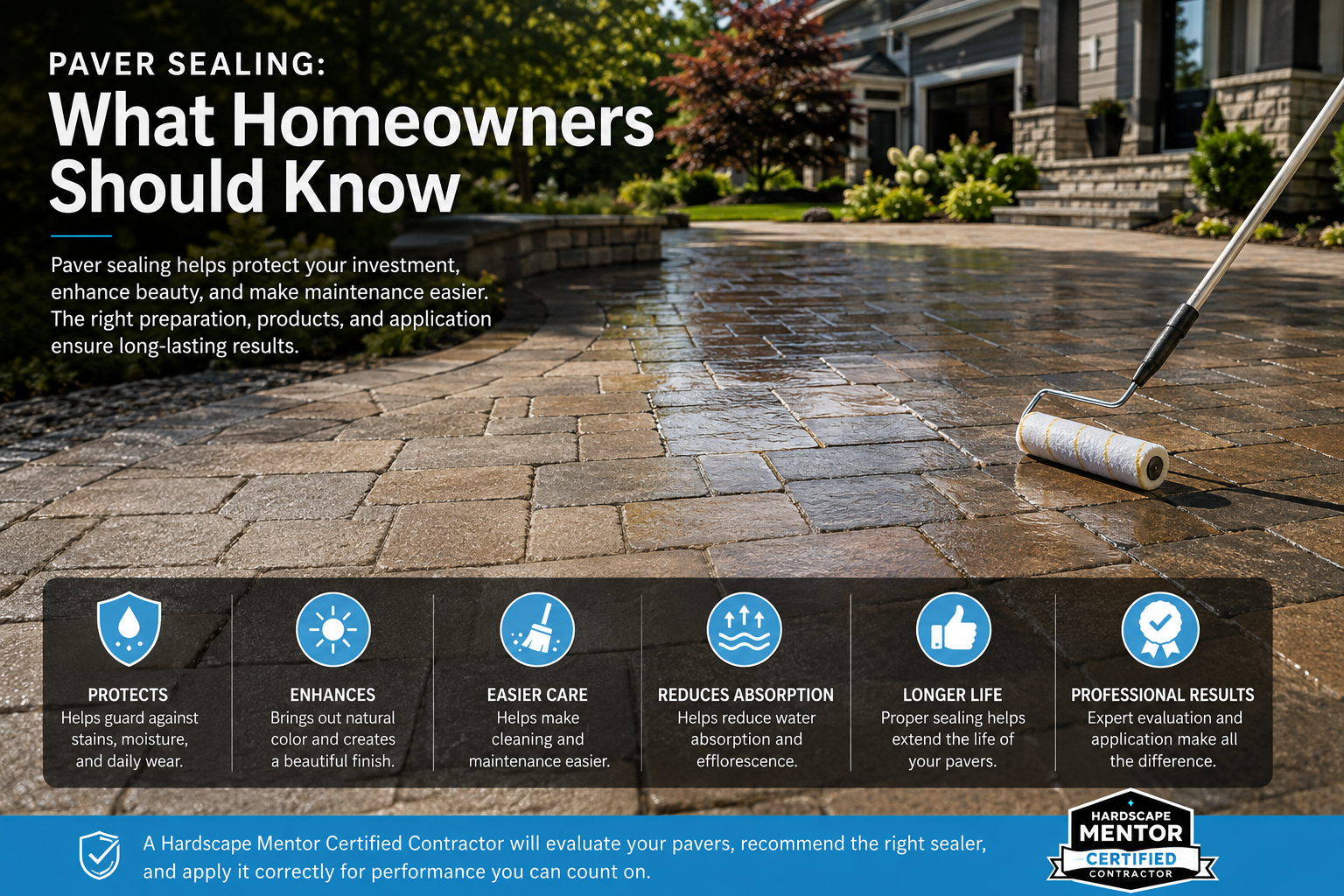
A paver sealer is a liquid treatment applied to the surface of concrete pavers, clay pavers, manufactured stone, and certain other masonry products. Depending on the sealer, it may reduce surface absorption, improve stain resistance, enhance color, stabilize joint material, and make the pavement easier to clean. Some sealers create a visible surface film, while others penetrate or preserve a more natural appearance.
Sealing does not correct structural problems beneath the pavers. Sunken areas, poor drainage, unstable edges, loose pavers, failed joints, and inadequate base preparation should be repaired before sealing. Applying sealer over an unstable surface may temporarily improve its appearance, but it will not stop movement caused by foundation or drainage problems.
A Hardscape Mentor Certified Contractor should determine whether sealing is appropriate and whether repairs, joint replacement, stain removal, or restoration work must be completed first.
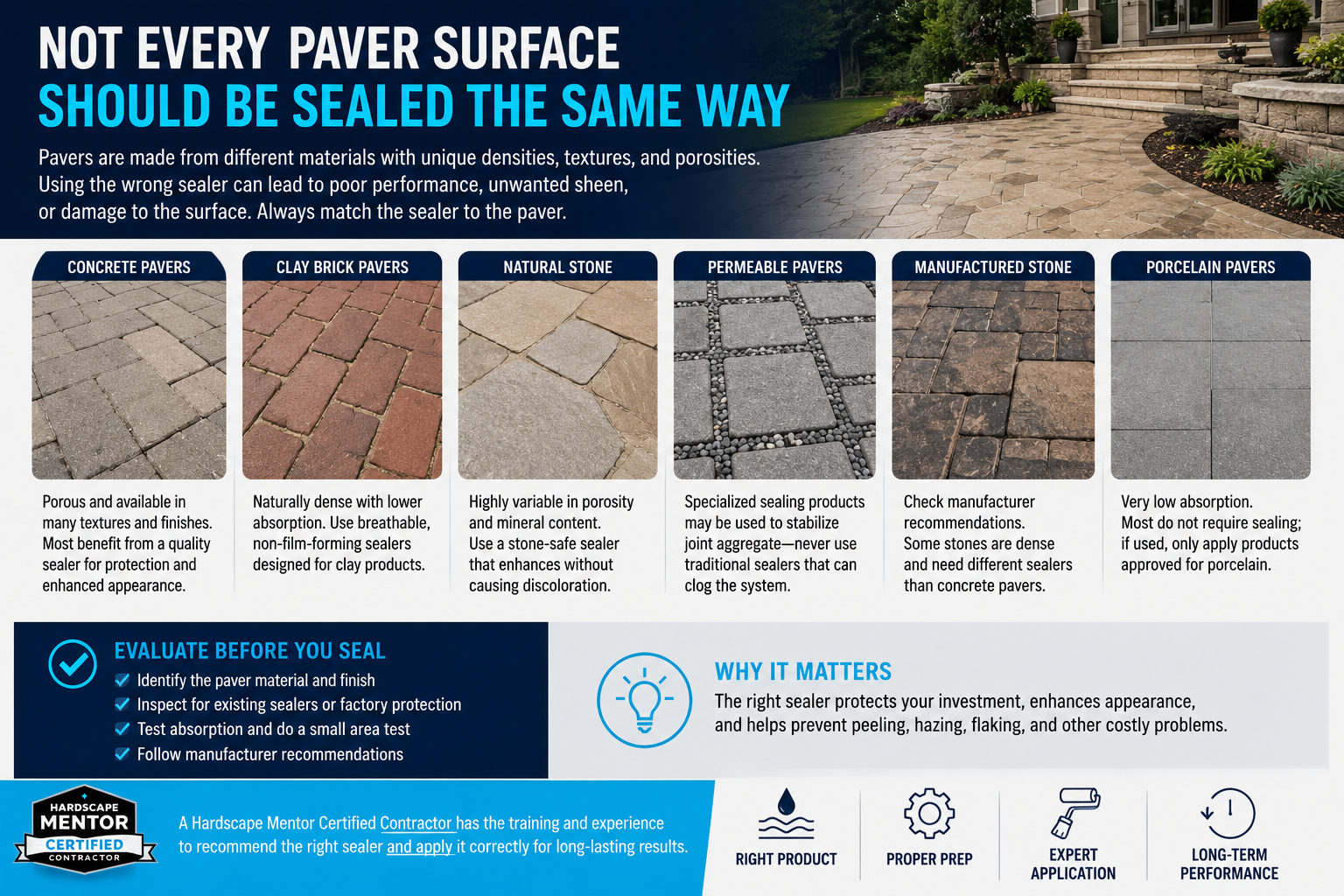
Concrete pavers, clay brick, wet-cast products, natural stone, porcelain, and manufactured stone do not absorb sealer in the same way. Even two concrete paver products may react differently because of their density, surface texture, age, factory treatments, and exposure.
The contractor should identify the material, inspect its porosity, review the joint system, and determine whether a previous sealer or factory-applied protection is present. Some premium pavers already include integral or factory-applied stain-resistant technology, which may change the need for or compatibility of an additional sealer.
A small test area should be completed in an inconspicuous location before treating the entire project. This allows the homeowner to evaluate color enhancement, sheen, absorption, traction, and overall appearance under the property’s actual lighting conditions. Sealer manufacturers commonly instruct applicators to test the product before full installation.

Find a Certified Contractor Today
Ready to start your next outdoor living project? Use our contractor locator to connect with verified Hardscape Mentor Certified Contractors in your area.

Newly manufactured pavers may release naturally occurring mineral deposits known as efflorescence. Joint materials may also need time to cure, dry, or stabilize before a sealer is applied. Sealing too early with an incompatible product can trap moisture or mineral deposits and create haze or uneven coloration.
There is no universal waiting period that applies to every paver, joint material, and sealer combination. Some manufacturers recommend waiting approximately 30 days before using certain protective sealers over newly installed polymeric sand. Other breathable products may allow earlier or even immediate application when the surface and joint system meet the product requirements.
A Hardscape Mentor Certified Contractor should follow the current written instructions from the paver manufacturer, joint-material manufacturer, and sealer manufacturer rather than relying on one standard timeline for every project.
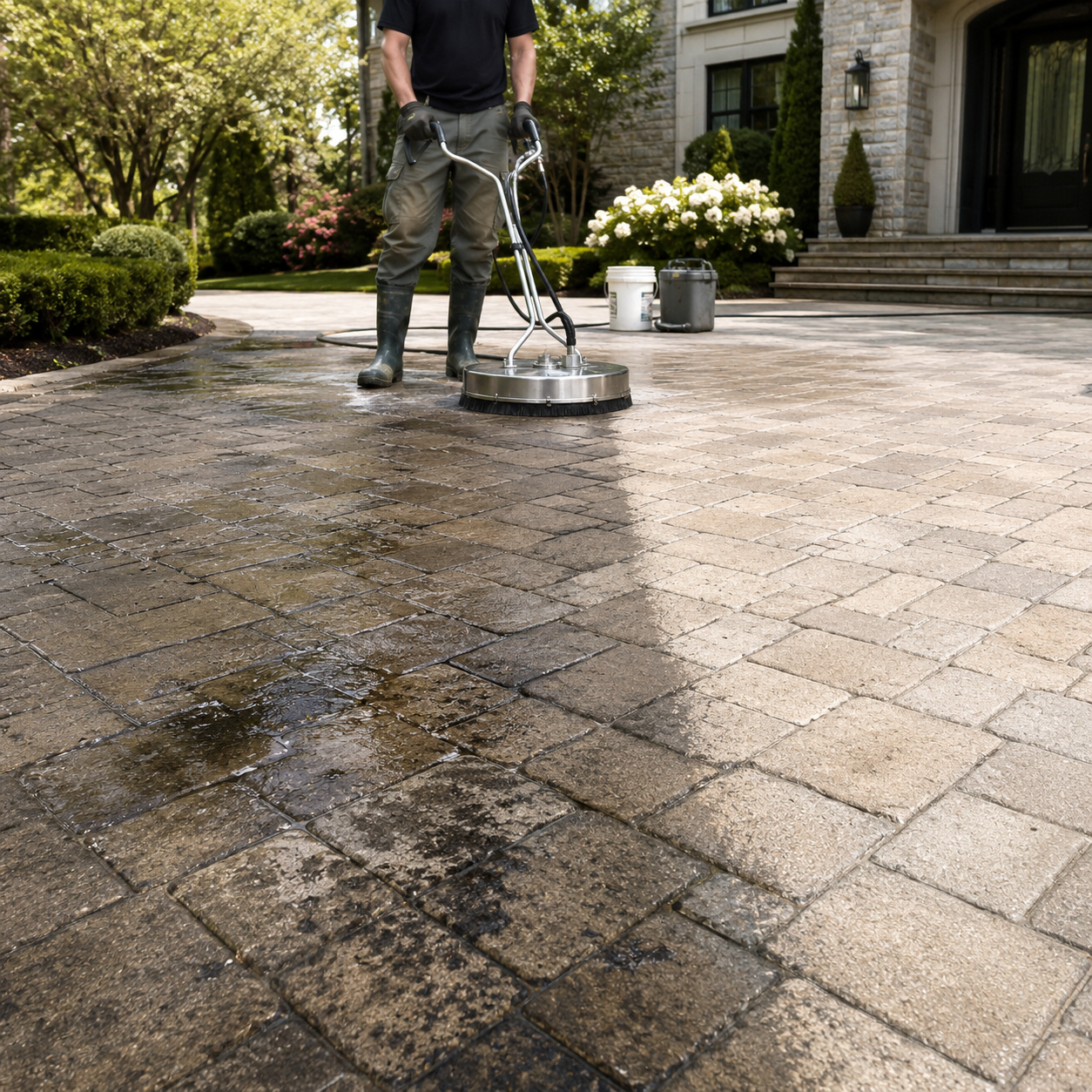
Sealer should only be applied to a properly cleaned and prepared surface. Dirt, oil, grease, rust, tire marks, leaf stains, fertilizer residue, algae, mildew, efflorescence, and cleaning chemicals can interfere with penetration and create permanent discoloration beneath the coating.
Different stains require different treatments. An oil extractor may be needed for vehicle or cooking stains, while rust, organic growth, mineral deposits, and efflorescence may require separate products. Using an overly aggressive cleaner or the wrong chemical can discolor the pavers, damage surrounding materials, or interfere with the sealer.
After cleaning, the surface should be thoroughly rinsed so no cleaner remains in the pores or joints. The pavers and joint material must then dry according to the sealer’s technical requirements. Applying sealer over damp or contaminated pavers is a common cause of cloudiness, whitening, and uneven absorption.
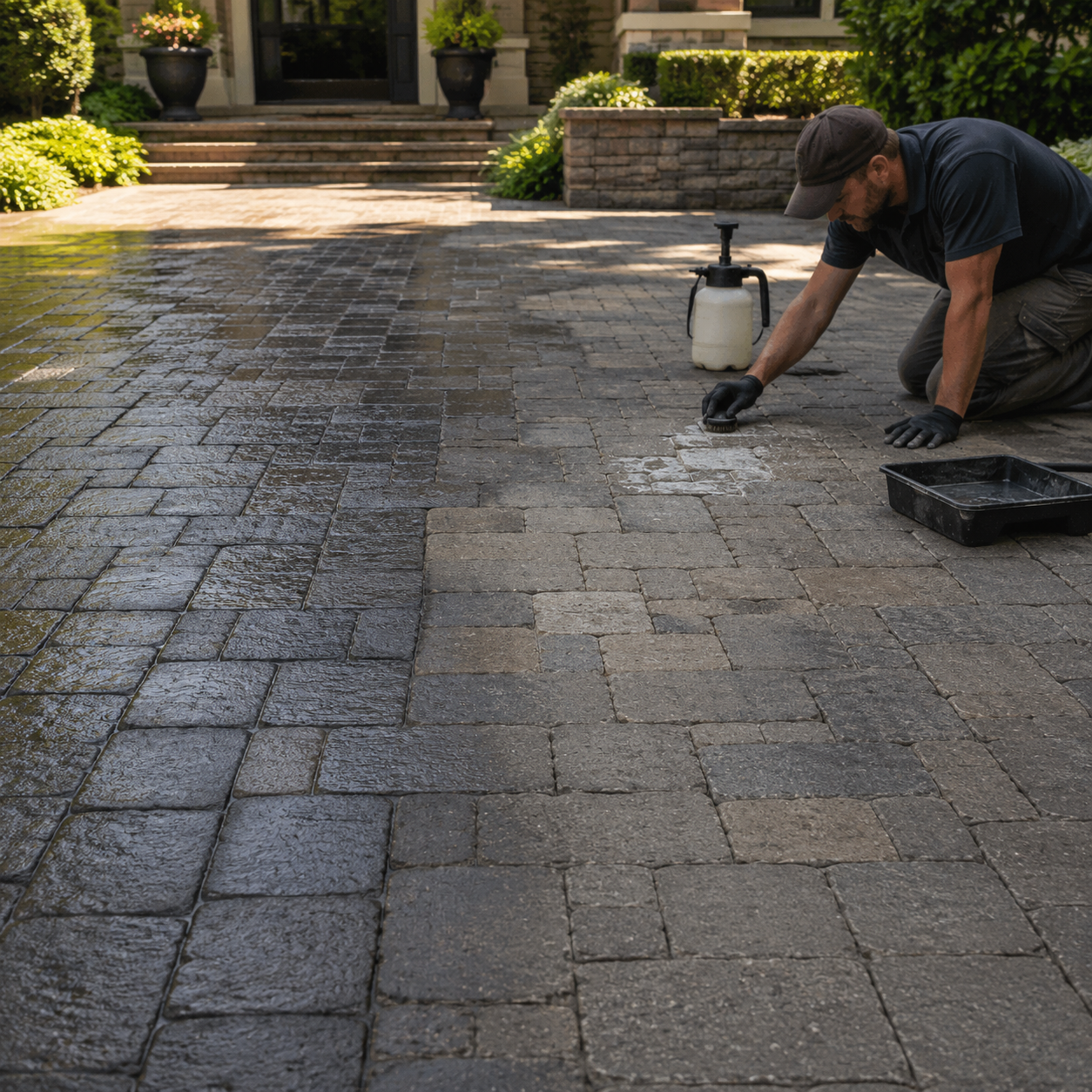
Applying a new sealer over an unidentified coating can cause adhesion failure, peeling, bubbling, whitening, or an uneven finish. Water-based and solvent-based products may not be compatible, and a heavily coated surface may not absorb another application evenly.
The contractor should inspect the existing finish and determine whether it is worn, intact, failing, or contaminated. A small compatibility test may reveal whether the new product bonds correctly or reactivates the old coating. Where the existing sealer is cloudy, peeling, excessively glossy, or incompatible, stripping may be required before the surface can be resealed.
Stripping pavers can require specialized chemicals, equipment, containment, and repeated cleaning. Homeowners should understand that restoring a failed coating may be more involved than a standard cleaning and resealing service.
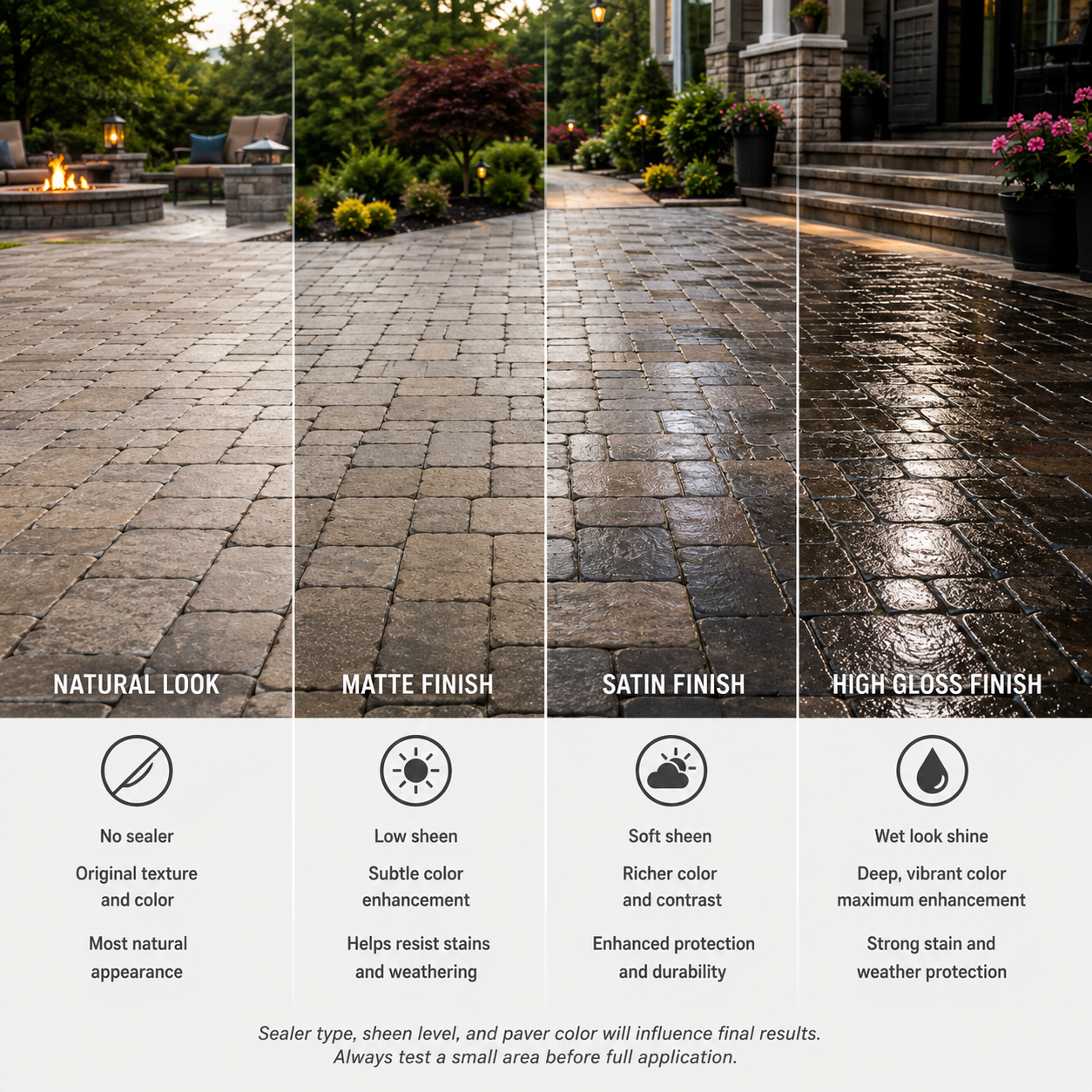
Paver sealers are available in natural-look, matte, color-enhancing, satin, semi-gloss, wet-look, and high-gloss finishes. A natural-look product may provide protection while creating little visible change. A color-enhancing sealer can deepen the paver tones, while wet-look and gloss products produce a more noticeable finish.
Sealers also differ in chemistry and performance. Some products penetrate the paver with minimal film formation, while others create a protective coating on the surface. Breathability, stain resistance, joint stabilization, ultraviolet exposure, moisture conditions, and maintenance expectations should all influence the selection. CMHA and major manufacturers recognize multiple sealer types with different appearance and performance characteristics.
The contractor should show the homeowner a cured sample rather than relying only on a brochure. Paver color, texture, porosity, and outdoor lighting can make the completed finish look different from a printed photograph.

Some paver sealers are designed only to protect the surface, while others also penetrate the joints and stabilize conventional sand or aggregate. Joint stabilization can help reduce erosion, washout, insect activity, and material movement under water flow and routine cleaning.
Before sealing, joints should be inspected for erosion, weeds, contamination, insufficient depth, or failed polymeric material. Loose or deteriorated joints may need to be removed and replaced before the sealer is applied. The replacement sand or aggregate must be compatible with the pavers, joint dimensions, base construction, drainage, and sealer.
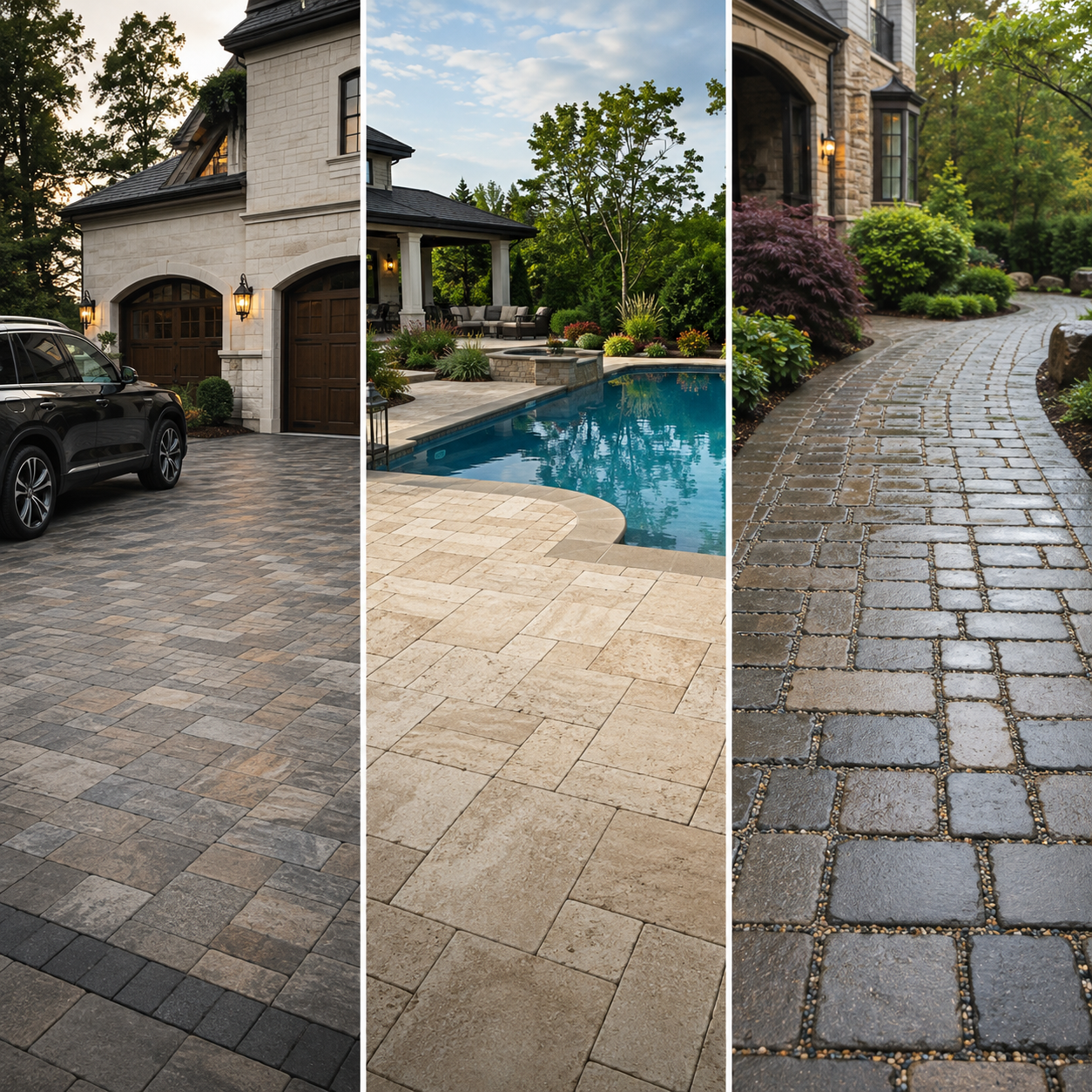
Permeable paver systems require special attention. Their widened joints must remain capable of accepting water. Products intended for ordinary joint sand should not be assumed suitable for permeable aggregate. Specialized permeable chip stabilizers are available to bind the joint stone while preserving the intended pavement function.
Paver sealing should be scheduled during suitable weather. Rain, high humidity, dew, extreme heat, cold surfaces, and strong wind can affect absorption, drying, curing, and overspray control.
Many sealer manufacturers provide a specific application range. Some products require daytime and nighttime temperatures between approximately 40°F and 95°F and limit maximum surface temperatures. Other products may have different requirements, so the current technical data sheet must always control the application.
Hot pavers may cause the sealer to dry before it can be evenly distributed. Cool, damp, or shaded conditions may slow curing and increase the risk of trapped moisture. Wind can move spray onto siding, windows, plants, pools, vehicles, and neighboring property.


Professional sealer application requires more than coating the pavers until they appear wet. The product must be applied at the manufacturer’s specified coverage rate and distributed evenly across pavers, joints, edges, borders, steps, and textured surfaces.
Depending on the product, the approved method may include a low-pressure sprayer, roller, squeegee, or a combination of spraying and back-rolling. Back-rolling or squeegeeing can help remove excess material, improve distribution, and prevent pooling in low areas or textured paver surfaces.
Overapplication can leave a sticky, overly glossy, cloudy, or uneven finish. Underapplication may produce inconsistent protection and visible lap marks. Coverage rates also change with paver porosity, age, texture, joint width, and whether the product is being used for joint stabilization.
Paver driveways are exposed to vehicle traffic, oil, tire residue, deicing materials, turning forces, and concentrated stains. The selected sealer should be appropriate for vehicular use, and existing automotive stains should be treated before the surface is sealed.
Pool decks require careful consideration of traction, heat, water exposure, pool chemicals, and bare-foot comfort. A high-gloss finish may not be appropriate for every pool environment. The contractor should evaluate the paver texture and test the proposed finish before sealing a frequently wet area. Premium paver manufacturers specifically identify surface texture and traction as important considerations for pool applications.
Permeable pavers rely on open, aggregate-filled joints for stormwater infiltration. A product intended for permeable pavement should stabilize the correct chip size without blocking drainage. Conventional joint-stabilizing products should not be substituted without confirming compatibility.
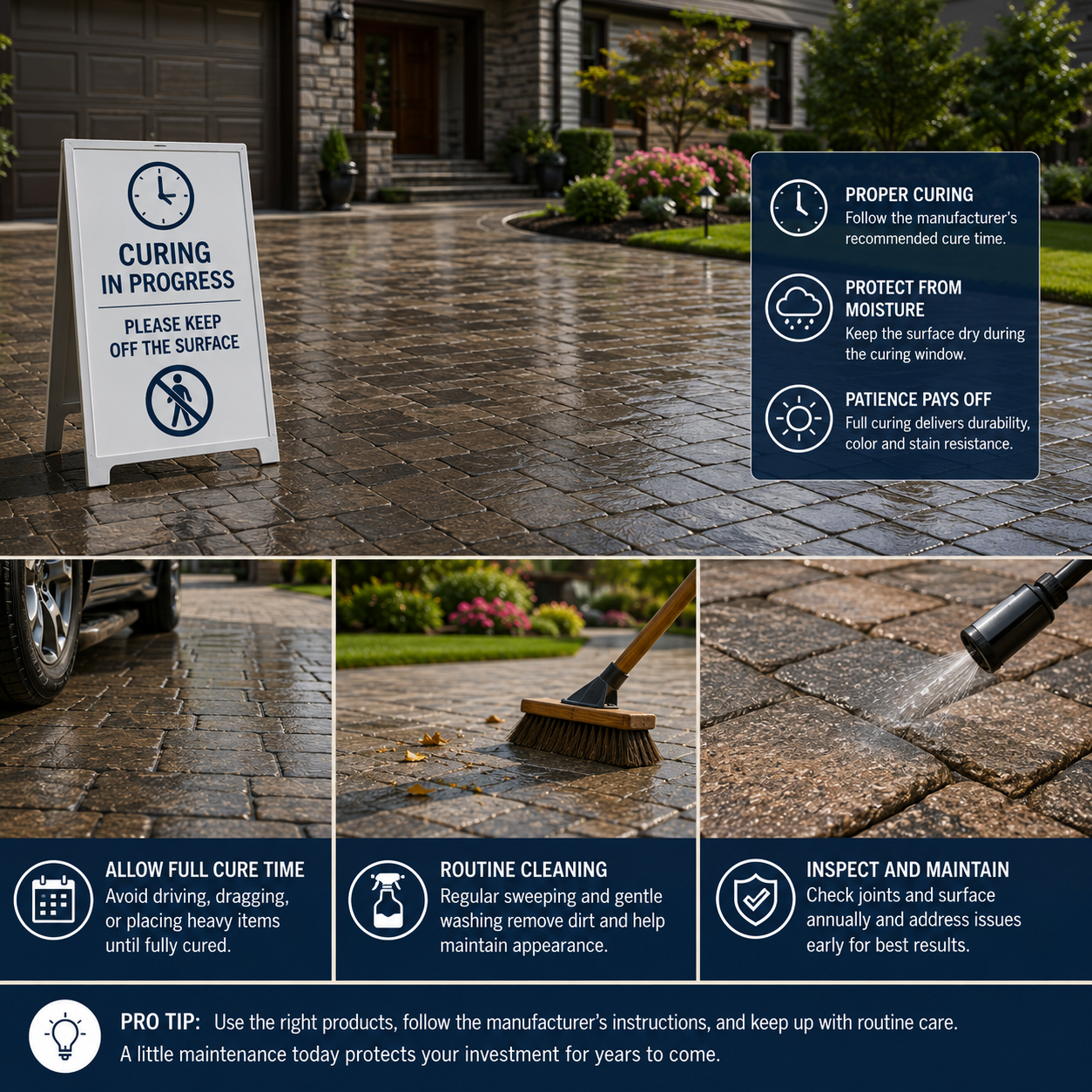
After application, the sealed area must remain protected while the product cures. Foot traffic, furniture, irrigation, vehicles, rain, pool water, and landscape work should be kept off the surface for the period specified by the manufacturer.
Dry-to-touch time is not necessarily the same as full cure time. Cooler temperatures, shade, humidity, heavy application, and limited airflow may increase the time required before the surface can safely return to service.
Sealed pavers should still be maintained. Sweeping, prompt stain treatment, gentle washing, joint inspection, and drainage cleaning help preserve the surface. There is no universal resealing schedule. Product type, traffic, sunlight, climate, cleaning methods, and previous applications all affect how long a sealer performs.
Paver sealing should begin with an inspection, not a product recommendation. The contractor should identify the paver material, previous coatings, stains, repairs, joint condition, drainage, and surrounding features before preparing a scope of work.
A professional proposal should explain the cleaning process, stain treatments, repairs, joint replacement, sealer product, intended finish, application method, weather requirements, curing period, property protection, and future maintenance. Homeowners should also receive realistic expectations about stains that may remain and variations that may become more visible after color enhancement.
A Hardscape Mentor Certified Contractor should understand that cleaning, joint restoration, sealing, and maintenance are connected parts of the complete hardscape system. Hardscape Mentor’s training library includes cleaning and sealing procedures, joint-material selection, maintenance, and restoration practices for professional hardscape crews.

Image #1
Lorem ipsum dolor sit amet, consectetur adipiscing elit.

Image #2
Lorem ipsum dolor sit amet, consectetur adipiscing elit.

Image #3
Lorem ipsum dolor sit amet, consectetur adipiscing elit.

Image #4
Lorem ipsum dolor sit amet, consectetur adipiscing elit.
Image #5
Lorem ipsum dolor sit amet, consectetur adipiscing elit.

Image #6
Lorem ipsum dolor sit amet, consectetur adipiscing elit.
Find a Hardscape Mentor Certified Contractor Today
A successful hardscape project begins with thoughtful planning and continues with construction methods suited to the property, climate and intended use.