
 Outdoor water features can introduce sound, movement, reflection, cooling effects, wildlife interest, and a strong visual focal point to residential landscapes. Options range from ecosystem ponds and natural waterfalls to pondless waterfalls, formal spillways, wall spouts, decorative fountains, urns, spheres, bowls, and combined fire-and-water features. These elements may be installed within a garden, positioned beside a patio, or fully integrated into masonry walls, columns, pool areas, steps, and outdoor living spaces.
Established manufacturers such as Aquascape Inc and Atlantic-OASE offer coordinated systems for ponds, pondless or pond-free waterfalls, decorative fountains, concealed reservoirs, spillways, pumps, filtration, lighting, and maintenance. Using compatible system components can help contractors coordinate water storage, circulation, structural support, plumbing, filtration, lighting, and future service access. Product names referenced below are examples of recognized water-feature categories; current manufacturer instructions should always control the installation.


Water Features Should Be Planned With the Hardscape From the Beginning
A water feature should be planned as part of the complete outdoor environment rather than placed wherever unused space remains. The contractor should evaluate patios, walkways, retaining walls, seating walls, outdoor kitchens, pools, fire features, utilities, drainage, landscaping, and important views from inside the home. Homeowners should also decide whether the feature’s main purpose is sound, visual movement, fish and aquatic plants, entertainment, architectural impact, or masking nearby noise.
Early planning allows plumbing lines, electrical sleeves, reservoir space, wall penetrations, lighting wires, structural support, and service access to be incorporated before pavers, wall caps, veneers, or finished concrete are installed. Aquascape waterfall spillways may be built into hardscape walls, while Atlantic-OASE formal spillway systems are specifically intended to add moving water to new or existing landscape and hardscape structures. A Hardscape Mentor Certified Contractor should coordinate the water feature with the complete site so the finished installation appears intentional and remains accessible for maintenance.
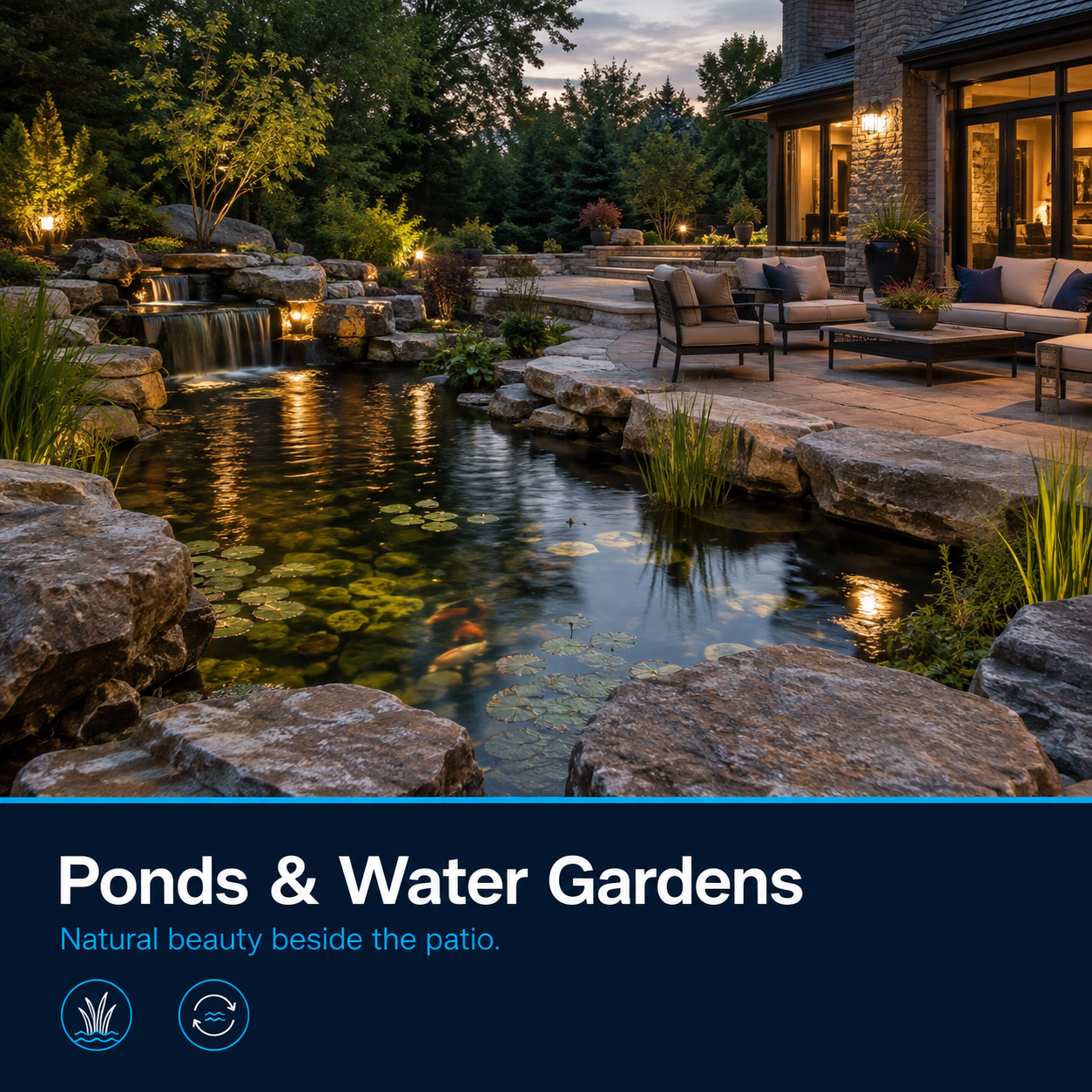
A residential pond can become the central feature of a garden or outdoor living space. Ponds may support fish, aquatic plants, waterfalls, streams, fountains, decorative stone, bridges, stepping stones, and surrounding seating areas. Natural-style ecosystem ponds generally combine circulation, mechanical filtration, biological filtration, rocks, gravel, plants, and beneficial biological activity to help create a balanced environment.
Aquascape ecosystem pond systems commonly use a skimmer at one end of the pond and a BioFalls filtration or waterfall component at the other, creating circulation across the pond. Atlantic-OASE also offers pumps, filtration, UVC clarification, aeration, lighting, and water-care components that can be combined into complete pond systems. A Hardscape Mentor Certified Contractor should coordinate pond depth, shelves, liner protection, stone placement, filtration, overflow, electrical service, surrounding grades, and access for seasonal maintenance.
The surrounding hardscape should be designed so surface runoff, mulch, fertilizers, and sediment are not routinely directed into the pond. Patios and seating areas can be placed close enough to enjoy the water without creating unstable edges or difficult maintenance conditions. Large stones, coping, planted edges, or formal masonry borders may be used depending on the desired style. The pond should feel connected to the property while retaining enough service space for pumps, skimmers, filters, plants, and fish care.

Find a Certified Contractor Today
Ready to start your next outdoor living project? Use our contractor locator to connect with verified Hardscape Mentor Certified Contractors in your area.

A pondless waterfall provides the sound and movement of a waterfall or stream without maintaining a visible pond at the bottom. Water travels down the waterfall, enters a gravel-covered underground reservoir, and is pumped back to the top in a continuous recirculating loop. This format works well beside patios, entrances, walkways, outdoor kitchens, retaining walls, and properties where homeowners prefer not to maintain fish or an open body of water.
Aquascape Pondless Waterfall systems may use hidden AquaBlox or basin-style reservoirs, a pump vault, and a waterfall spillway. Atlantic-OASE pond-free systems use components such as Eco-Blox reservoir modules, Pump Vaults, and FastFalls spillways to create concealed water storage and circulation. Both approaches allow the visible stream and waterfall to be shaped around natural stone, grade changes, and the surrounding landscape.
The reservoir must be sized for the water contained within the stream, waterfall, plumbing, and operating splash zone. The contractor should also account for evaporation, wind, exposed stone, seasonal plant growth, and water that remains in the stream when the pump is shut off. A Hardscape Mentor Certified Contractor should coordinate liner placement, reservoir capacity, pump access, edge treatment, stone stability, and surrounding hardscape elevations.
Formal water features use clean lines, defined spillways, and architectural materials rather than natural streams and irregular stone. They may be incorporated into retaining walls, freestanding walls, columns, raised planters, pool structures, outdoor kitchens, and patio borders. Common options include stainless-steel spillways, water walls, scuppers, wall spouts, sheer descents, illuminated spillways, and narrow sheets of falling water.
Aquascape Waterfall Spillways can be built into hardscape walls for formal waterfall applications. Atlantic-OASE offers Formal Spillway systems that include Colorfalls, color-changing Colorfalls, WaterWalls, wall spouts, spillways, basins, and basin kits. Atlantic WaterWalls use a back-angled outlet that directs water onto the wall surface, while wall spouts provide smaller architectural accents for traditional or contemporary masonry.
These features require precise coordination between masonry construction and water-feature equipment. Plumbing locations, wall openings, waterproofing, basin dimensions, spillway support, bonding, splash control, and future access should be established before the wall is completed. A Hardscape Mentor Certified Contractor should also verify that caps, veneers, mortars, metals, and surrounding paving are suitable for repeated moisture exposure.


Decorative fountains provide moving water without requiring a large pond or long waterfall. They can be installed near entrances, within patios, beside seating walls, in courtyards, along walkways, or as focal points within planting beds. Popular styles include urns, spheres, stacked-slate forms, bubbling rocks, basalt columns, vase fountains, brass bowls, copper bowls, fountain walls, and sculptural pieces.
Aquascape offers Stacked Slate Urns, Spheres, and Wall systems that may be installed over concealed AquaBasin reservoirs or incorporated into existing ponds and waterfalls. Atlantic-OASE Fountain Basin and Eco-Rise systems support decorative pieces while concealing water storage, pumps, plumbing, and lighting cords below the finished surface. Atlantic-OASE also offers decorative brass and copper bowl systems that may be used alone, in groups, or as the beginning of a waterfall.
Decorative fountains can soften a formal patio or introduce sound to a smaller outdoor space where a pond would not be practical. The basin and support system must accommodate the weight, water volume, splash pattern, pump, and expected maintenance. Contractors should also provide a practical way to remove the decorative piece or reach the pump without dismantling the surrounding hardscape.
Spillway bowls may be placed on walls, pedestals, columns, terraces, pond edges, or pool structures. Water may overflow around the entire rim, exit through a defined spillway, or cascade from one bowl into another. These features can visually connect different hardscape elevations and create moving water without constructing a full stream.
Aquascape Spillway Bowls and Basins may be installed as standalone fountains or incorporated into ponds, waterfalls, and fountainscapes. Aquascape also offers fire-and-water versions of certain stacked-slate spheres, urns, bowls, and basalt-style features that combine a recirculating water system with a separate flame component. Atlantic-OASE copper and brass fountain bowls can be used as individual accents, overflow features, or waterfall starting points supported by fountain basins or Eco-Rise systems.
Fire and water must remain separate, serviceable systems. The contractor should coordinate burner clearances, gas supply, ignition access, splash protection, drainage, electrical components, wind exposure, and approved fire media. A Hardscape Mentor Certified Contractor should work with qualified gas and electrical professionals when required so the flame and water systems can operate safely without damaging each other.


Pool and spa environments may include waterfalls, scuppers, wall spouts, spillway bowls, deck jets, fountains, rain curtains, raised basins, reflecting channels, and fire-and-water accents. These features can connect the pool to patios, walls, seating areas, outdoor kitchens, and landscape structures. The water feature should complement the pool without creating excessive splash on walking surfaces or blocking circulation and maintenance access.
Aquascape Spillway Bowls can be used to introduce falling water into pools and other water features. Atlantic-OASE fountain bowls, formal spillways, WaterWalls, wall spouts, and hardscape basins provide additional options for integrating water with masonry, poolscapes, and patios. Manufacturer systems should be selected with attention to pool-water chemistry, corrosion resistance, bonding, plumbing, lighting, and winterization requirements.
The contractor should consider how water movement will affect nearby furniture, coping, pavers, steps, outdoor kitchens, and fire features. Pool chemicals may also affect metal finishes, mortar joints, natural stone, and pumps not intended for pool use. A Hardscape Mentor Certified Contractor should coordinate with the pool builder and other licensed professionals before incorporating a separate water-feature system into a pool environment.
Many fountains, spillways, and pondless waterfalls depend on components that disappear beneath stone, gravel, pavers, or masonry. These may include underground reservoirs, pump vaults, water matrix blocks, structural risers, fountain basins, flexible hardscape basins, and plumbing chases. Although hidden, these elements determine how much water the system stores, how much weight it supports, and how easily the pump can be serviced.
Aquascape AquaBasin systems provide concealed reservoirs for decorative urns, spheres, walls, and fountains. Atlantic-OASE Fountain Basins conceal water storage, pumps, plumbing, and accessories, while Eco-Rise systems provide structural support for heavier decorative pieces. Atlantic flexible hardscape basins are designed for formal spillways, WaterWalls, and wall spouts within block and masonry applications.
The basin should be supported by properly prepared soil or a designed structural base. Contractors must account for the full operating weight of the water, decorative feature, stone, masonry, and surrounding hardscape. The access opening should remain reachable after the patio or landscaping is completed. A Hardscape Mentor Certified Contractor should coordinate excavation, compaction, structural support, reservoir volume, overflow, pump access, and frost conditions.


The pump is responsible for circulating water through waterfalls, spillways, fountains, bowls, and filters. An undersized pump may create weak or uneven flow, while an unnecessarily large pump may increase splash, noise, energy use, and plumbing pressure. The correct pump depends on the desired flow, spillway width, vertical lift, pipe length, fittings, filtration, and the resistance created by the complete plumbing system.
Aquascape offers pump categories for ponds, waterfalls, pondless waterfalls, fountains, and specialty applications. Atlantic-OASE provides pumps, pump vaults, plumbing components, and diverters for ponds, pond-free features, formal spillways, and multi-feature fountain systems. Flow controls and diverters can allow multiple urns, bowls, or outlets to be balanced from one appropriately designed system.
Plumbing should be protected from sharp stone, settling, freezing, future excavation, and hardscape loads. Shutoff valves, check valves, cleanouts, unions, and access points may simplify service when appropriate for the system. A Hardscape Mentor Certified Contractor should calculate the full operating conditions instead of selecting a pump based only on the feature’s visible dimensions.
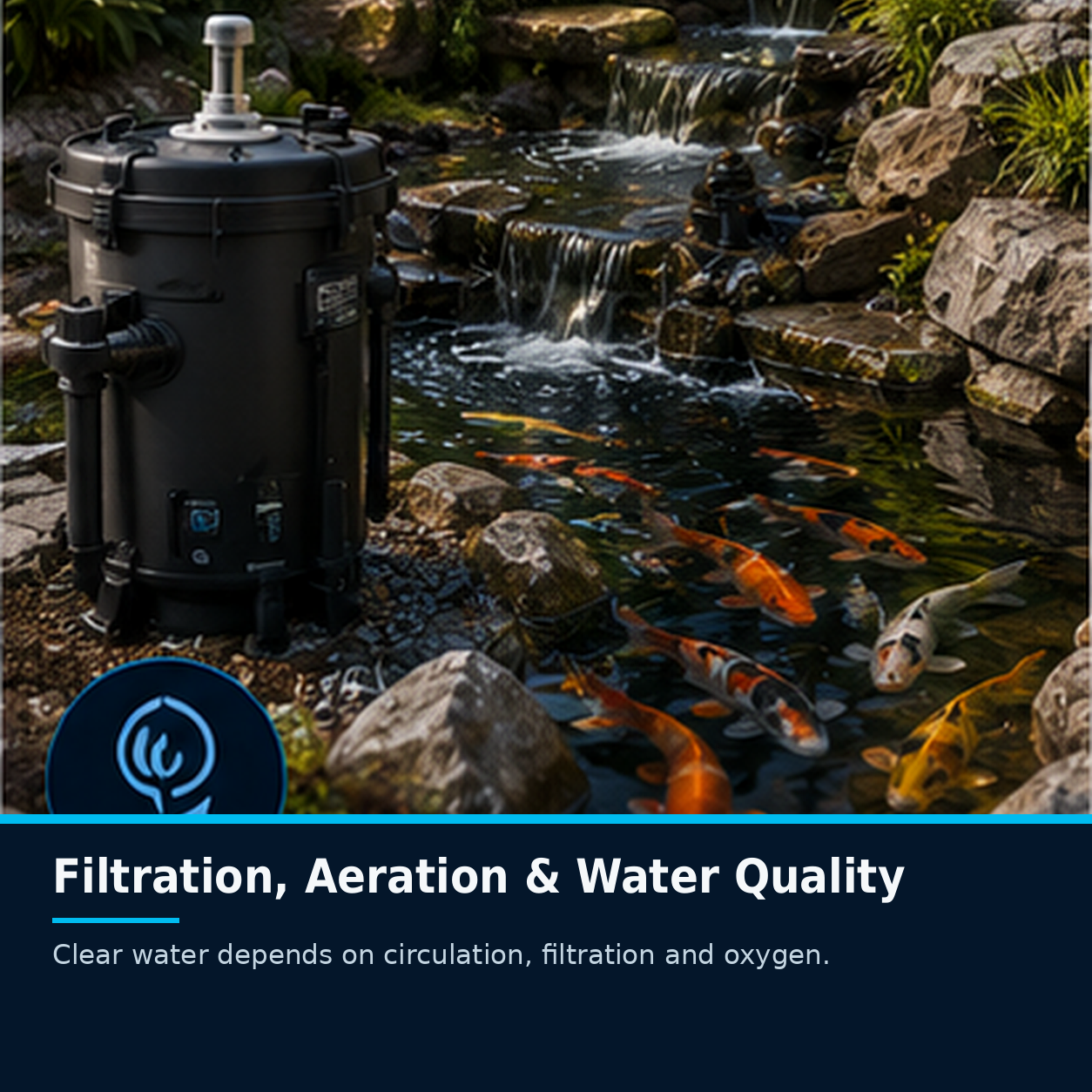
A decorative fountain has different water-quality needs than a fish pond, water garden, or large recirculating waterfall. Fish ponds may require mechanical filtration, biological filtration, aeration, plant balance, and circulation designed around the pond’s volume and fish population. Decorative fountains may focus more heavily on controlling debris, scale, algae, staining, and splash.
Aquascape ecosystem pond systems commonly coordinate skimmers, BioFalls filtration, pumps, rocks, gravel, plants, and circulation. Aquascape Fountain Bowl biological filter options can also allow certain decorative bowls to function as water gardens or supplemental pond filtration. Atlantic-OASE offers pumps, filtration, UVC clarification, aeration, water treatments, vacuums, netting, and maintenance products designed for ponds and water features.
Homeowners should understand that clear-looking water and biologically healthy water are not always the same thing. Sunlight, temperature, fish, leaves, fertilizer runoff, water source, and circulation all affect performance. A Hardscape Mentor Certified Contractor should explain the intended maintenance routine and ensure filters, pumps, treatment areas, and cleanout points remain accessible.

Underwater and exterior lighting can reveal waterfalls, streams, bubbles, spillways, fountains, fish, stone textures, and surrounding hardscapes after dark. Fixtures may be installed beneath water, behind waterfalls, inside bowls, under caps, within walls, or in nearby landscaping. The lighting should emphasize water movement without creating glare or exposing wiring and fixtures unnecessarily.
Aquascape and Atlantic-OASE offer water-feature lighting and system components intended for ponds, fountains, waterfalls, and other wet environments. Fixtures, transformers, connections, and controls must be approved for their installation location and coordinated with qualified electrical professionals when required. Atlantic-OASE also provides warm-white and color-changing lighting and control options for water-feature systems.
Maintenance may include removing debris, cleaning filters, inspecting pumps, adjusting rocks, topping off water, checking lighting, cleaning fountain surfaces, and preparing the system for freezing conditions. Aquascape notes that pondless waterfalls may be shut down or operated through winter, but continued operation requires monitoring for ice dams, redirected flow, and changing water levels. Climate, local weather, water chemistry, plant growth, and the feature type should determine the maintenance plan.
A water feature is more than the visible stone, bowl, spillway, or waterfall. It may combine excavation, structural support, masonry, waterproofing, pumps, plumbing, filtration, electrical components, lighting, drainage, and ongoing maintenance. The more fully the feature is incorporated into patios, walls, pools, fire features, or outdoor kitchens, the more important coordination becomes.
Homeowners should ask potential contractors which water-feature systems they regularly install and whether they have experience with ponds, pondless waterfalls, formal spillways, fountains, and manufacturer-specific components. They should also ask how the contractor calculates reservoir capacity, selects pumps, controls splash, protects plumbing, provides service access, and coordinates electrical or gas work. Because manufacturers such as Aquascape and Atlantic-OASE offer components intended to function as coordinated systems, it is reasonable to infer that familiarity with the selected system can improve planning, installation, troubleshooting, and future service.
The proposal should identify the feature type, dimensions, visible materials, basin or reservoir, pump, plumbing, filtration, lighting, controls, maintenance expectations, and warranty responsibilities. A Hardscape Mentor Certified Contractor should coordinate the water feature with the surrounding hardscape and clearly explain how every component will remain accessible. Choosing the right contractor helps protect the appearance, performance, and long-term value of the complete outdoor living project.
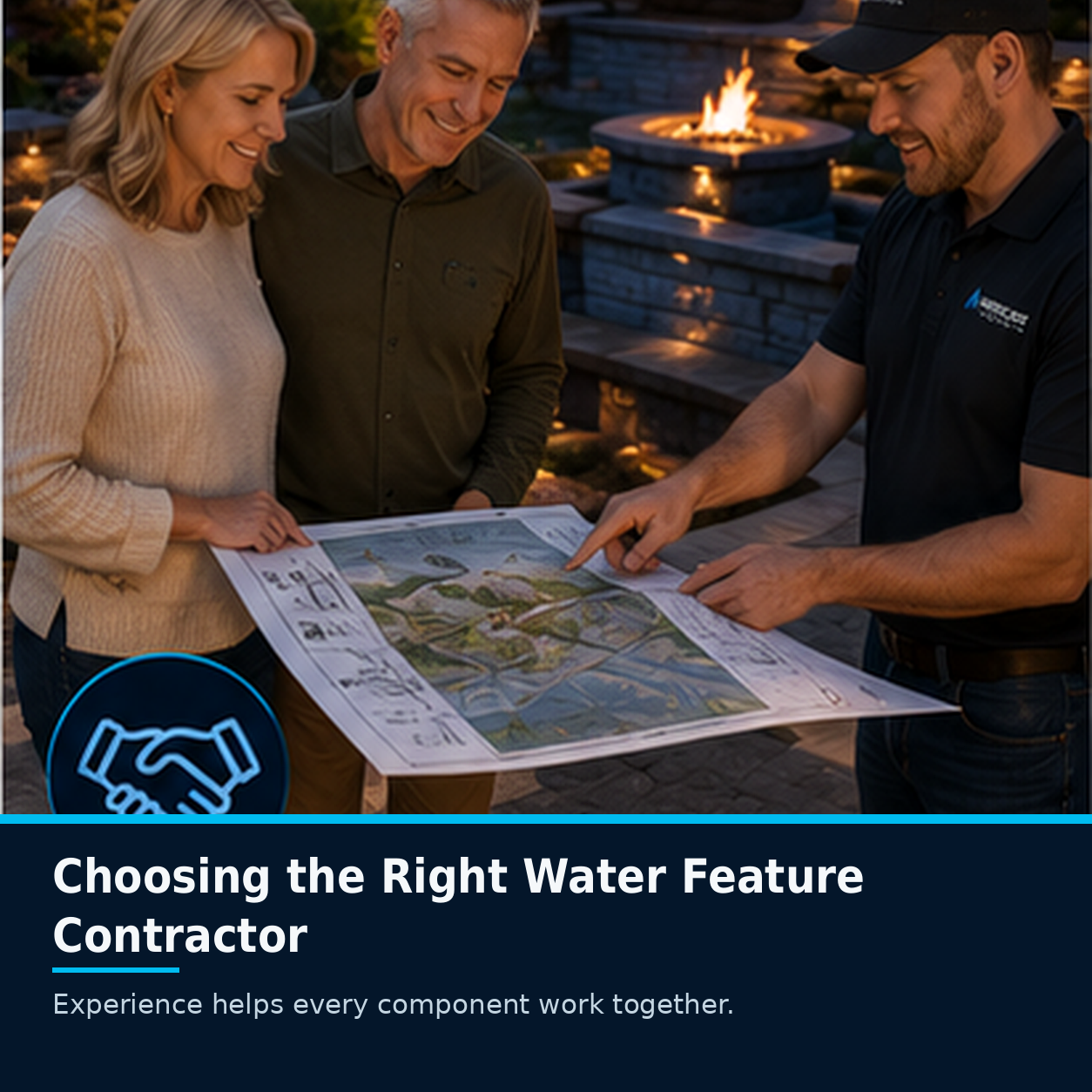

Image #1
Lorem ipsum dolor sit amet, consectetur adipiscing elit.

Image #2
Lorem ipsum dolor sit amet, consectetur adipiscing elit.

Image #3
Lorem ipsum dolor sit amet, consectetur adipiscing elit.

Image #4
Lorem ipsum dolor sit amet, consectetur adipiscing elit.
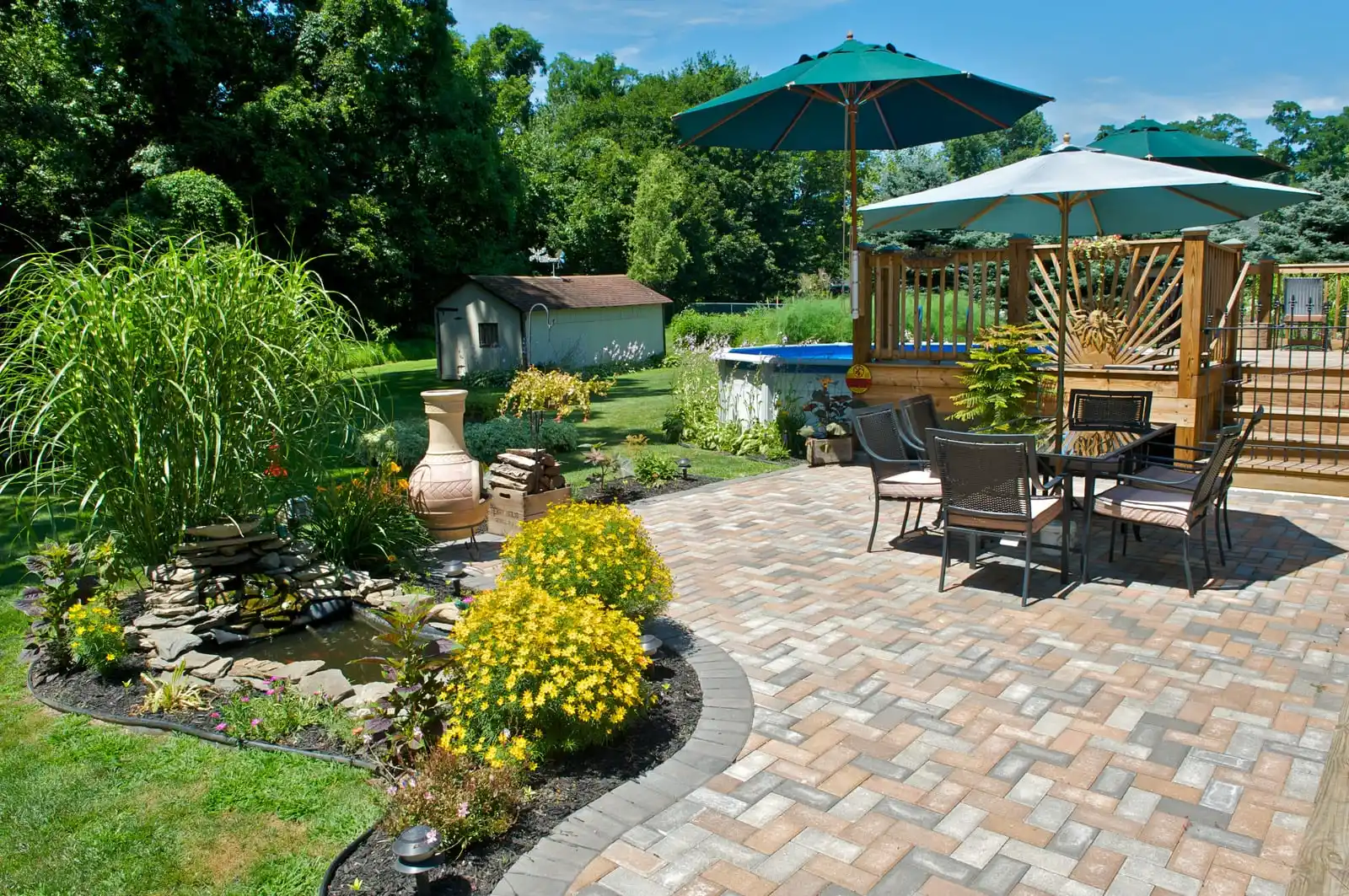
Image #5
Lorem ipsum dolor sit amet, consectetur adipiscing elit.

Image #6
Lorem ipsum dolor sit amet, consectetur adipiscing elit.
Find a Hardscape Mentor Certified Contractor Today
A successful hardscape project begins with thoughtful planning and continues with construction methods suited to the property, climate and intended use.