
 Stepping stones can be one of the most versatile features in an outdoor space. They can guide movement through a garden, connect a patio to a fire pit, create a path around a water feature, provide access across a lawn, or help transition between elevations with stepping stone stairs. Some projects are designed to look informal and natural, while others use clean lines and modern spacing to create a more architectural feel.
Although stepping stones may seem simple, a well-built installation requires thoughtful planning. A successful project should consider layout, spacing, drainage, material selection, base preparation, surface safety, and how the stepping stones connect with the rest of the landscape. A Hardscape Mentor Certified Contractor can help homeowners choose the right system for both appearance and long-term performance.


The Intended Use of the Stepping Stone Path Should Guide the Design
A lightly used garden path has different requirements than a daily route connecting the home to a pool, driveway, patio, outdoor kitchen, detached garage, or backyard gate. The expected traffic should influence the path width, stone size, spacing, surface texture, and foundation.
The path should also follow a logical route. Homeowners naturally take the shortest or most convenient path between destinations, so a design that forces unnecessary turns may eventually be ignored. A Hardscape Mentor Certified Contractor should evaluate doors, gates, activity areas, furniture, landscape beds, and existing traffic patterns before establishing the final layout.

Stepping stones may be made from flagstone, cut natural stone, precast concrete, concrete pavers, porcelain slabs, granite, limestone, sandstone, or large-format manufactured paving units. Each material offers different colors, textures, thicknesses, edge treatments, and maintenance requirements.
Natural flagstone often works well in gardens, woodland settings, and around ponds or streams. Large rectangular concrete or porcelain slabs can create a cleaner modern appearance when paired with gravel, turf, or decorative stone. A Hardscape Mentor Certified Contractor should consider climate, traction, strength, thickness, availability, and compatibility with surrounding patios and walls before recommending a material.

Find a Certified Contractor Today
Ready to start your next outdoor living project? Use our contractor locator to connect with verified Hardscape Mentor Certified Contractors in your area.

Stepping stones should be large enough to receive a secure foot placement without requiring users to carefully aim for each stone. Small or unusually shaped stones may work as decorative accents but can feel uncomfortable on a frequently used path.
Spacing should follow a natural walking stride. Stones positioned too far apart can force users to stretch, while stones placed too close together may interrupt the intended visual rhythm. Before permanent installation, a Hardscape Mentor Certified Contractor should arrange and test the path so it feels comfortable for different members of the household.
Natural stepping stone paths commonly use irregular flagstone, varied shapes, soft curves, and plantings that blend the path into the landscape. They are often used in cottage gardens, wooded properties, water gardens, and informal backyard settings.
Formal layouts use cleaner lines, repeated sizes, consistent spacing, and more precise alignment. Large square or rectangular slabs can create a modern walkway, patio transition, or geometric lawn crossing. A Hardscape Mentor Certified Contractor should help homeowners choose a layout that complements the architecture of the home and the character of the surrounding landscape.


Stepping stones should not be installed without first evaluating the soil, existing grade, runoff, irrigation, downspouts, tree roots, and areas that remain wet after rainfall. These conditions can affect settlement, erosion, surface cleanliness, and walking safety.
Water should not collect around or beneath the stones. Low areas may become muddy, while runoff on slopes can wash out bedding and surrounding gravel or mulch. A Hardscape Mentor Certified Contractor should correct drainage and elevation problems before installing the finished path.
Permanent stepping stones should be installed on a foundation suited to the material, soil, traffic, and climate. Placing stones directly on loose soil or grass may result in rocking, tilting, settlement, and uneven transitions.
Installation may include removing topsoil and organic material, compacting the subgrade, adding a compacted aggregate base, and using an appropriate setting layer. Each stone should receive uniform support rather than resting only at several high points. A Hardscape Mentor Certified Contractor should also confirm that the finished stones sit at safe and practical elevations.

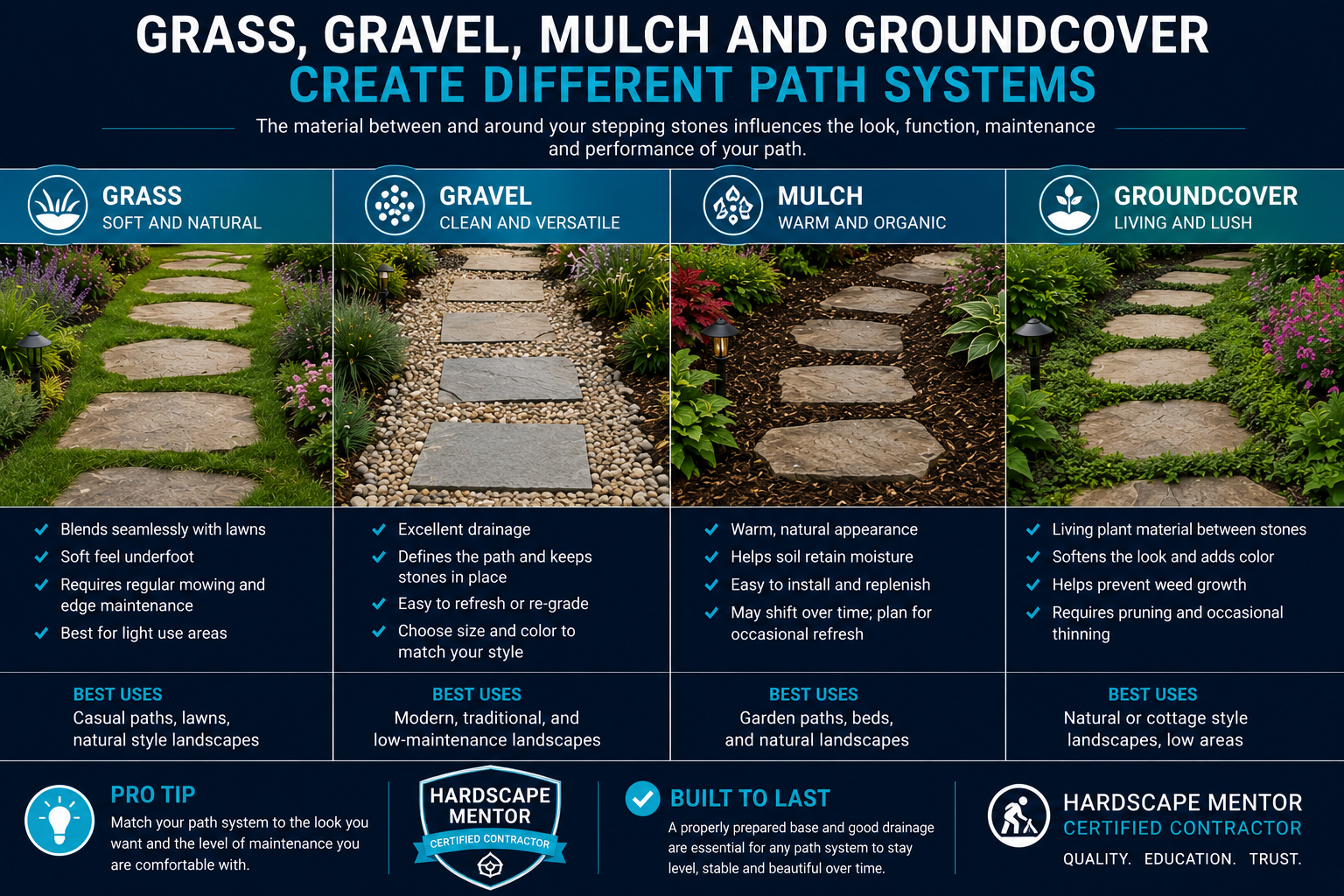
Stepping stones installed through grass create a soft, open appearance and allow the lawn to remain the dominant surface. Stones should be set at a practical mowing height and spaced so turf can be maintained without damaging edges.
Gravel and decorative stone can produce a cleaner, lower-maintenance look, while mulch and groundcover create a softer garden character. These surrounding materials need proper edging, drainage, and weed-management planning. A Hardscape Mentor Certified Contractor should coordinate the stone height with the finished level of the selected infill.
Stepping stones can guide homeowners around ponds, waterfalls, streams, fountains, rain gardens, and other water features. They may also be positioned across shallow water to create an interactive garden crossing.
Wet environments introduce additional concerns, including algae, moss, splash, shifting soil, changing water levels, and slippery surfaces. Stones used near or within water should be large, stable, textured, and supported by a foundation appropriate for the water feature. A Hardscape Mentor Certified Contractor should coordinate the path with the liner, pumps, plumbing, stonework, and maintenance access.


Large-format stepping stones can form more than a narrow walkway. Square or rectangular concrete, porcelain, or natural stone pads may be arranged as an informal patio, seating area, grill station, poolside space, or transition between larger outdoor living zones.
Grass, artificial turf, gravel, or groundcover between the pads creates visible separation and gives the surface a lighter appearance than a continuous patio. The spaces between pads must still be designed for drainage, maintenance, furniture stability, and comfortable movement. A Hardscape Mentor Certified Contractor should coordinate the pad dimensions with furniture and actual use.
Large natural stones or manufactured slabs can create informal steps through sloped lawns, gardens, and wooded landscapes. These “stepping stone stairs” can feel less structured than traditional masonry steps while still providing a defined route between elevations.
The stone rise, tread depth, landing areas, surface texture, support, and drainage must be carefully considered. Irregular or widely varying elevations may be uncomfortable and increase tripping risk. A Hardscape Mentor Certified Contractor should determine whether the slope is appropriate for informal stone steps or requires a more conventional staircase with walls, railings, or engineered support.


Stepping stone paths are often integrated with landscape lighting, retaining walls, garden beds, boulders, patios, water features, columns, and outdoor living spaces. Coordinating these features early helps the path feel like part of the complete landscape rather than an isolated addition.
Low-voltage lighting can improve visibility without overwhelming the design. Edging may be needed to contain gravel or mulch, while planting should leave enough room for comfortable passage. A Hardscape Mentor Certified Contractor should also provide sleeves or conduit before the surrounding hardscape is completed.
Freeze-thaw movement, heavy rainfall, drought, erosion, roots, and soil settlement can affect stepping stones over time. Homeowners should inspect the path for rocking stones, uneven surfaces, washed-out joints, slippery buildup, weeds, and changing drainage patterns.
Maintenance may include cleaning, trimming grass, controlling weeds, refreshing gravel or mulch, and resetting individual stones when necessary. A Hardscape Mentor Certified Contractor should explain the installation system, expected care, and how repairs can be completed without unnecessarily rebuilding the entire path.
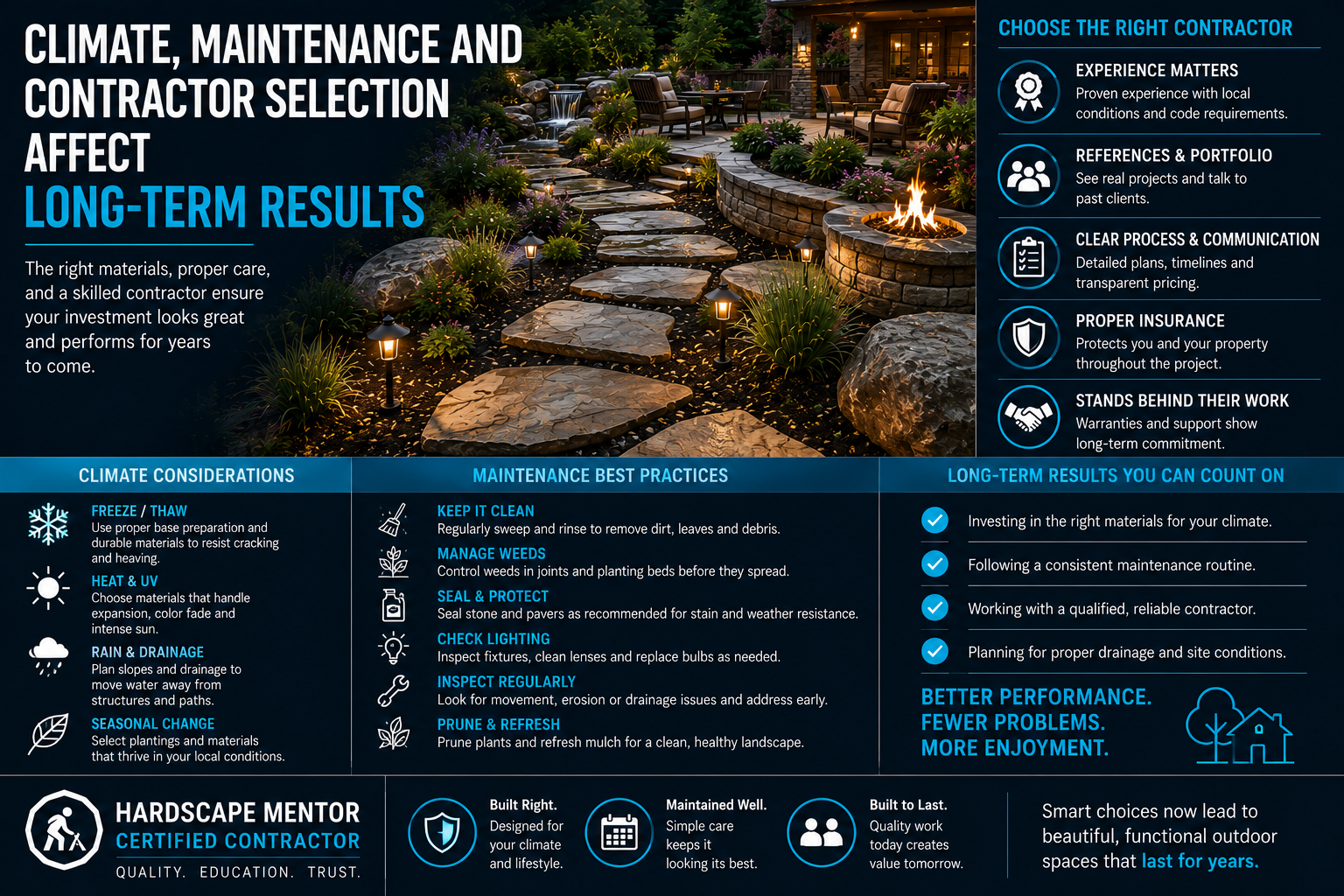

Image #1
Lorem ipsum dolor sit amet, consectetur adipiscing elit.

Image #2
Lorem ipsum dolor sit amet, consectetur adipiscing elit.

Image #3
Lorem ipsum dolor sit amet, consectetur adipiscing elit.

Image #4
Lorem ipsum dolor sit amet, consectetur adipiscing elit.
Image #5
Lorem ipsum dolor sit amet, consectetur adipiscing elit.

Image #6
Lorem ipsum dolor sit amet, consectetur adipiscing elit.
Find a Hardscape Mentor Certified Contractor Today
A successful hardscape project begins with thoughtful planning and continues with construction methods suited to the property, climate and intended use.