
 Seating walls can add both function and style to an outdoor space. They create built-in seating, define patios and gathering spaces, help organize traffic flow, and often become part of the overall architecture of the landscape. A seating wall can border a patio, frame a fire pit, edge a terrace, wrap a planter, or create a transition between spaces while providing practical everyday use.
Although seating walls may look simple, they require thoughtful planning. The wall system, base preparation, drainage, material selection, wall height, cap choice, curves, structural support, and connection to the surrounding patio or landscape all affect long-term performance. A Hardscape Mentor Certified Contractor should help homeowners choose a seating wall design that looks intentional, feels comfortable, and performs well over time.
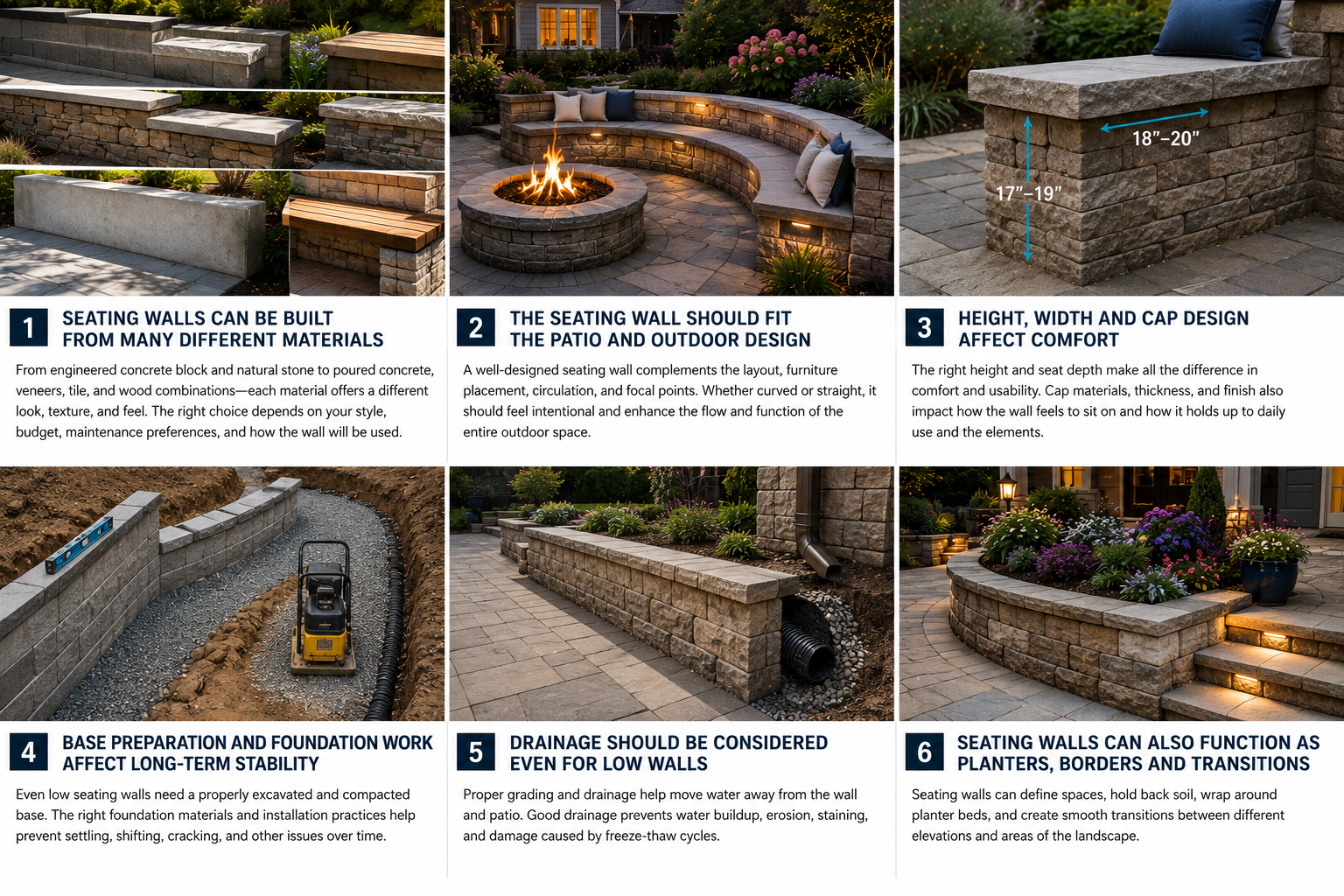

What Homeowners Should Know Before Starting a Seating Wall Project
A seating wall is more than just a low wall around a patio. It can create a finished edge, add visual structure, provide overflow seating, and make an outdoor living space feel more complete. Seating walls are often used around patios, fire features, outdoor kitchens, pools, landscape terraces, and garden spaces where extra seating is useful but loose furniture may feel cluttered.
Homeowners should think about how the wall will actually be used. Some seating walls are designed mainly as architectural borders, while others are intended for everyday use during entertaining and family gatherings. A Hardscape Mentor Certified Contractor should help determine whether the wall is primarily decorative, functional, or a combination of both before the layout and materials are finalized.

Seating walls can be built in a variety of ways depending on the look, structure, and performance needed for the project. Common options include engineered concrete wall block systems, natural stacked stone, mortared stone, poured concrete, CMU or concrete core walls with stone veneer, tile-clad seating walls, and hybrid designs that combine wood and masonry.
Each material creates a different appearance and comes with different installation methods, maintenance needs, and cost considerations. Some homeowners want a rustic dry-stack stone look, while others prefer a clean architectural wall with smooth caps and modern finishes. A Hardscape Mentor Certified Contractor should help match the wall system to the home, patio, climate, intended use, and surrounding outdoor features.

Find a Certified Contractor Today
Ready to start your next outdoor living project? Use our contractor locator to connect with verified Hardscape Mentor Certified Contractors in your area.

A seating wall should feel like part of the overall space rather than an afterthought. It should relate to the patio size, furniture layout, steps, fire features, planting beds, and circulation routes. A well-designed seating wall can make a patio feel more enclosed and comfortable without making it feel crowded.
Shape also matters. Seating walls may be straight, curved, angled, wrapped around a fire pit, or used to frame outdoor rooms. A Hardscape Mentor Certified Contractor should consider how people will move through the space, where they will gather, and how the wall will visually connect to the other hardscape features so the design feels balanced and intentional.
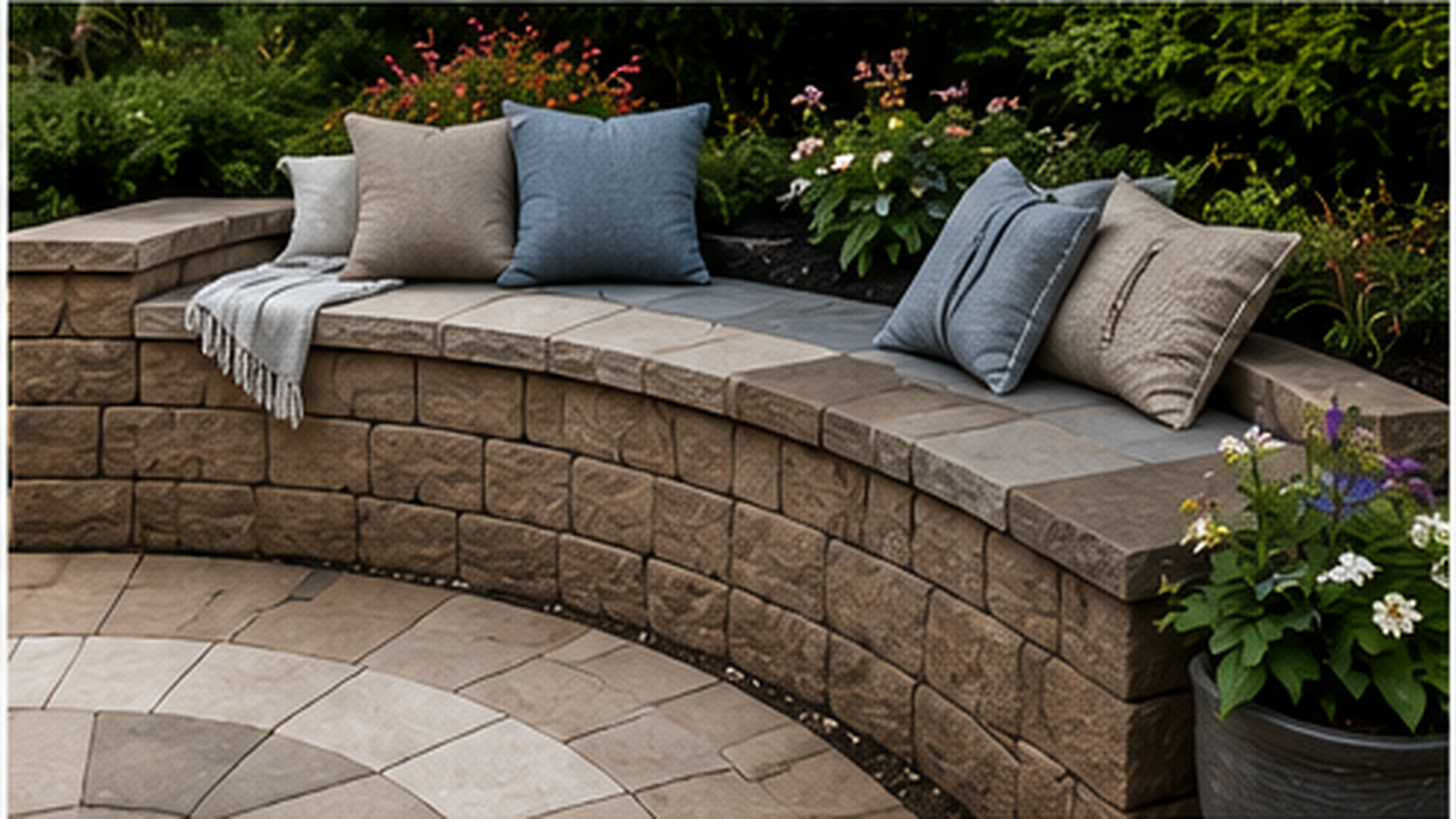
A seating wall should not only look good—it should also be comfortable to sit on. Wall height, depth, cap width, and surface finish all affect usability. If the wall is too high, too low, too narrow, or has an uncomfortable cap profile, it may be visually appealing but less practical.
Cap materials also matter. Natural stone caps, manufactured wall caps, poured concrete caps, and custom cut stone caps all create a different look and sitting experience. A Hardscape Mentor Certified Contractor should help determine the proper dimensions for both visual proportion and human comfort, especially if the seating wall will be used often.
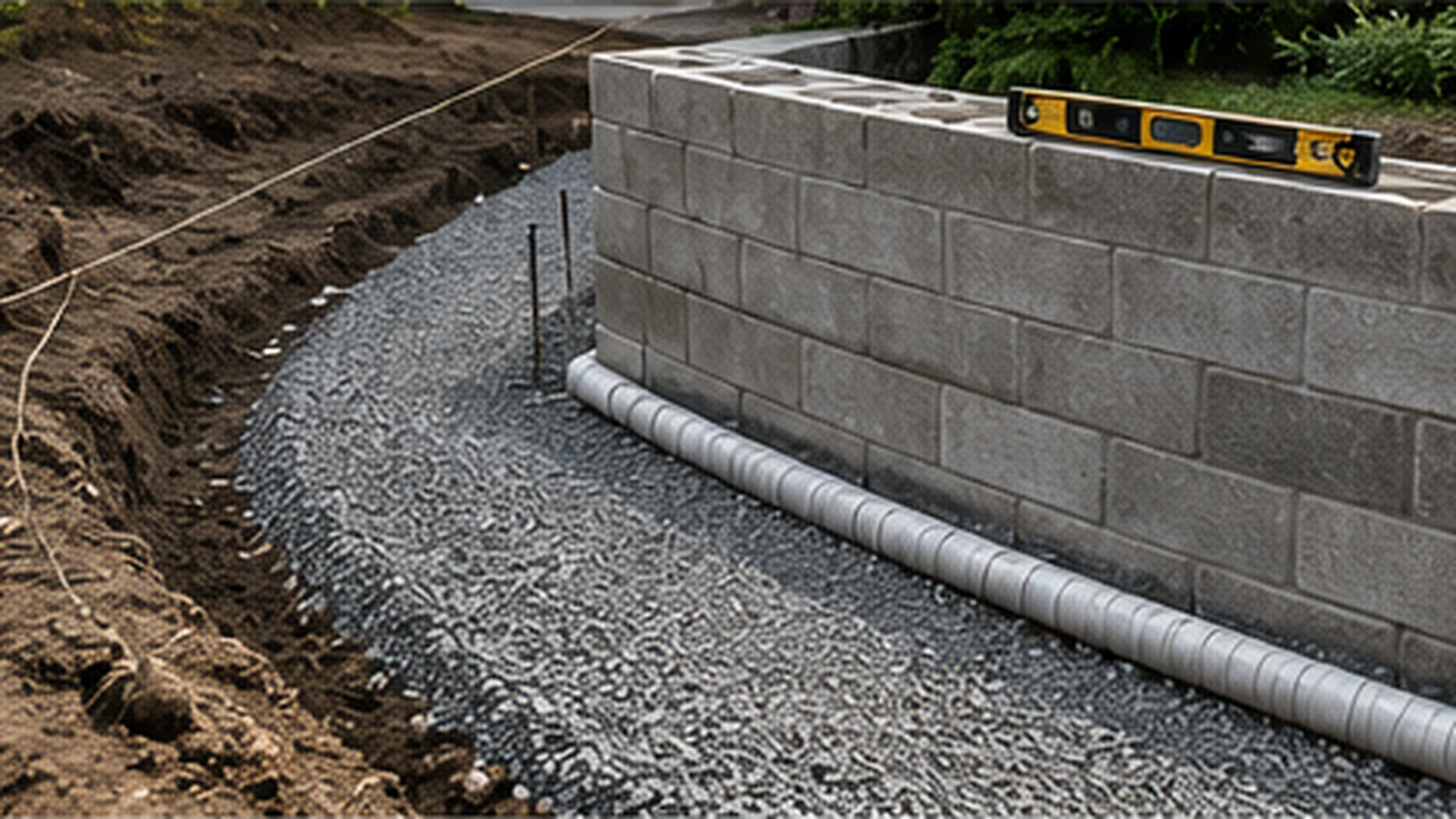
Even a low seating wall needs proper support beneath it. The wall foundation may require excavation, compacted aggregate base, reinforced footing work, or structural support depending on the wall type, soil conditions, and whether the wall also retains any grade.
A poorly prepared base can lead to movement, uneven settling, cracking, separation, or leaning over time. Seating walls integrated with patios, steps, or other hardscape features should be planned together so the whole system works as one installation. A Hardscape Mentor Certified Contractor should determine the correct excavation depth, base material, compaction, and support requirements before construction begins.
Homeowners often associate drainage with retaining walls, but seating walls can also be affected by trapped moisture, runoff, and poor grading. Water can wash out supporting soil, collect behind or beneath the wall, stain materials, or contribute to movement and freeze-thaw damage.
When seating walls are placed near patios, steps, slopes, planters, or raised features, drainage planning becomes even more important. A Hardscape Mentor Certified Contractor should evaluate grading, runoff, irrigation, and nearby drainage features to help prevent long-term moisture problems and improve performance.


Many seating walls serve more than one purpose. A wall may create seating on one side while containing a planting bed on the other. It may help define the edge of a patio, transition into steps, frame a fire feature, or soften elevation changes in the landscape.
This dual-purpose role is one of the reasons seating walls are so popular in outdoor living design. They provide structure without taking up as much visual or physical space as separate walls, planters, and furniture pieces might. A Hardscape Mentor Certified Contractor should help homeowners decide whether the wall needs to function only as seating or also as a planter, edge, terrace, or transition element.
Seating walls are commonly used around fire pits, fireplaces, patios, and outdoor kitchens because they provide built-in gathering space without requiring as much loose furniture. They can help orient guests toward a focal point while also giving the patio a more complete layout.
When used around fire features or cooking areas, spacing and circulation become especially important. The wall should offer usable seating without crowding the space or interfering with movement. A Hardscape Mentor Certified Contractor should plan the relationship between the wall, fire feature, cooking area, dining space, and walkways so the entire outdoor living area works comfortably together.
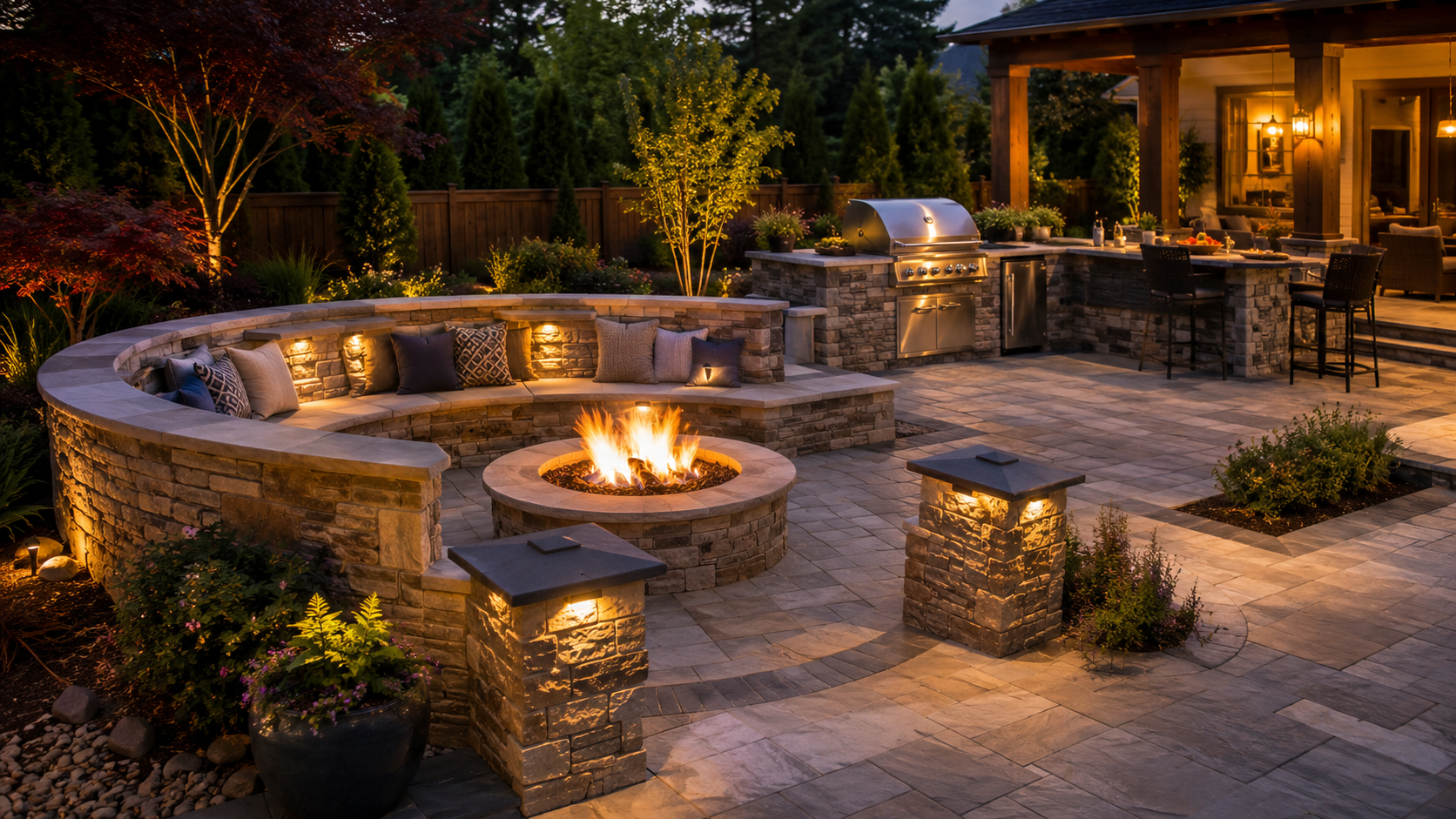

A seating wall should visually belong with the rest of the project. Color, texture, cap material, joint style, and surface finish should coordinate with the patio, home exterior, steps, columns, and surrounding landscape materials. The wall can either blend quietly into the space or stand out as a more prominent design feature.
Homeowners should also think about long-term appearance. Some finishes weather more gracefully than others, and some show stains, moisture, or wear more easily. A Hardscape Mentor Certified Contractor should help compare block systems, natural stone blends, veneer finishes, cap materials, and accent options so the completed wall looks cohesive and durable.
Lighting can make a seating wall more functional and visually dramatic at night. Low-voltage lighting, recessed wall lights, under-cap lighting, nearby path lights, or accent lighting can help define the wall and improve visibility for steps, patio edges, and gathering spaces.
Other accessories may include columns, planters, integrated benches, accent caps, or nearby seat pads and cushions. These details should be planned early so wiring, support, and layout can be incorporated during construction rather than added awkwardly later. A Hardscape Mentor Certified Contractor should coordinate lighting and accessories as part of the overall hardscape design.


Freeze-thaw cycles, heavy rainfall, irrigation, direct sun, salt exposure, and everyday wear can all affect how a seating wall performs. Some wall systems may be better suited to certain climates, and some finishes may require more maintenance than others.
Homeowners should also consider long-term care. Cleaning, re-leveling adjacent pavers, joint touchups, cap maintenance, sealing certain materials, or addressing nearby plant growth may all be part of ownership. A Hardscape Mentor Certified Contractor should help explain which materials and construction systems are best suited for the local climate and expected maintenance preferences.
A seating wall is not just a decorative add-on. It should be designed as part of the total hardscape plan, with proper support, comfortable proportions, drainage awareness, and thoughtful material coordination. Homeowners should ask contractors how the wall will be built, what system will be used, how it ties into the patio or landscape, and what type of maintenance to expect.
A Hardscape Mentor Certified Contractor should be able to explain material options, base preparation, structural considerations, comfort dimensions, wall caps, transitions, and how the seating wall fits into the overall design of the property. Choosing the right contractor helps reduce surprises and increases the chances of achieving a seating wall that is both attractive and long-lasting.


Image #1
Lorem ipsum dolor sit amet, consectetur adipiscing elit.

Image #2
Lorem ipsum dolor sit amet, consectetur adipiscing elit.

Image #3
Lorem ipsum dolor sit amet, consectetur adipiscing elit.

Image #4
Lorem ipsum dolor sit amet, consectetur adipiscing elit.
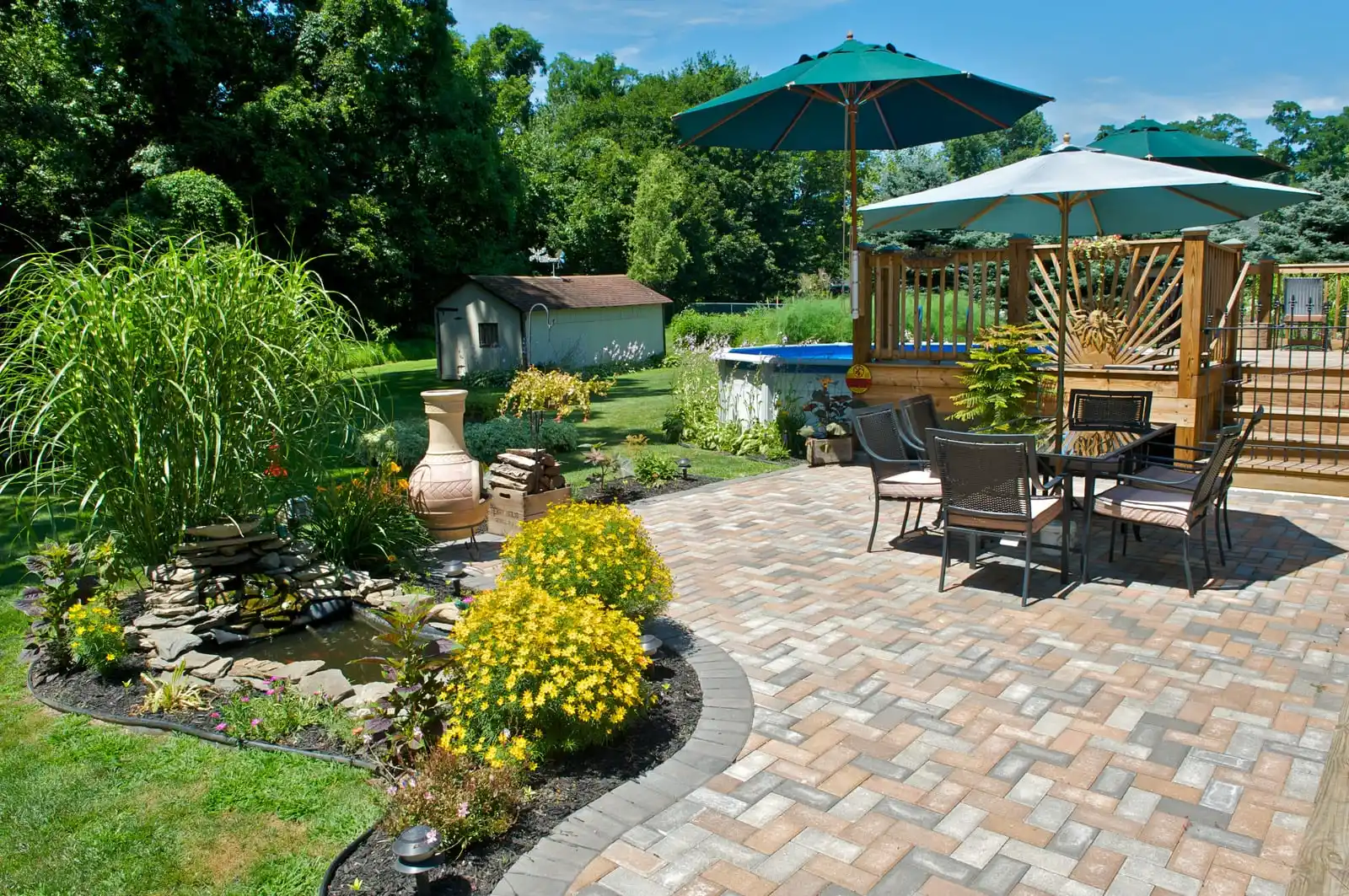
Image #5
Lorem ipsum dolor sit amet, consectetur adipiscing elit.

Image #6
Lorem ipsum dolor sit amet, consectetur adipiscing elit.
Find a Hardscape Mentor Certified Contractor Today
A successful hardscape project begins with thoughtful planning and continues with construction methods suited to the property, climate and intended use.